
Should you rely on the free building inspection report the selling agent hands you?
It is a fair question. The report is sitting there, it costs nothing, and you have just committed to a purchase that will shape your budget for decades. Paying again to prove something you have already been told feels like money for nothing.
I think relying on it is a very dangerous move.
Here is the story of why. About three years ago I was working with a couple to buy a family home in Kiama.
A new listing, and clients already in love
The listing came up during the week. Four bedrooms, two bathrooms, built in the early nineties, a quiet street with quality-looking neighbours.
The photos looked great. The price looked pretty sharp too.
The clients wanted to put in an offer before the first open home, because they had already fallen in love with it.
I advised them to wait. This was a property I could tell had issues.
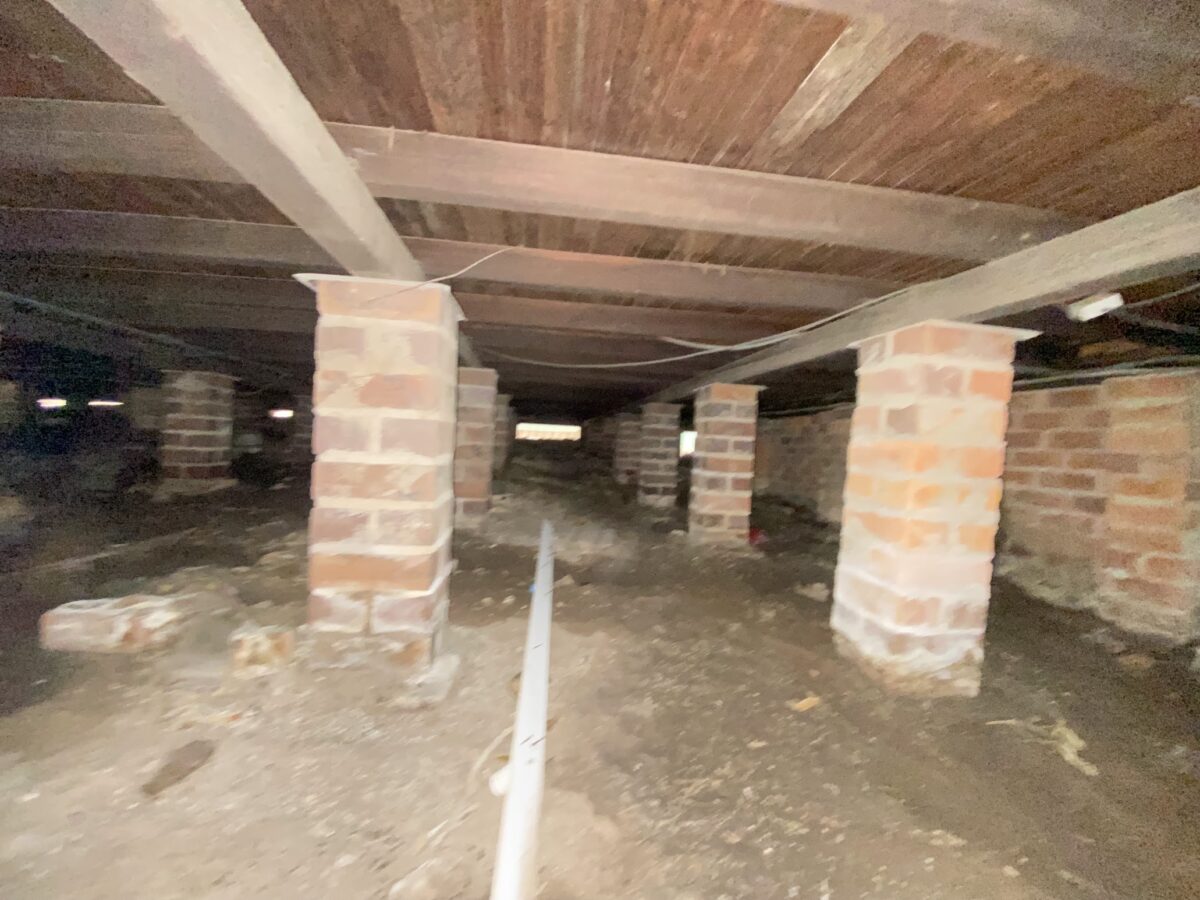
Nobody else at the open home went under the house
At the open home I went into the subfloor. I noticed nobody else was doing that.
That is not a small detail. On a timber-framed house the subfloor is where you find out what you are actually buying, and almost nobody looks.
Now, I am not a building inspector and I am not a qualified builder. But after fifteen years of inspecting homes on this coast, I know a termite lead when I see one. A lead is the mud gallery termites build so they can travel from the ground up into the timber without being exposed.
There were three live leads running into the timber frame wall of that house.
I came out and said to the agent, “There’s no way we’ll be putting in an offer on this house today.”
My clients were still in love, so I drew a line
They still wanted it.
So the condition was simple. No offer unless we organised another independent building inspection.
Then the agent’s report arrived, and it said the house was fine
We received a building report from the agent. It read clean. Solid house, minor maintenance only.
I had been under that house the same morning. It was not fine.
Plenty of building inspectors do excellent work. Some produce reports where the detail is not up to scratch. A buyer has no way of telling which kind is in front of them, and that is the whole problem with taking the free one on faith.
My own paperwork checks turned up two more things the report was never going to mention, because they are not a building inspector’s job. There was a drainage easement on the block and a sewer main running across it. Both are red flags. Survivable ones, if you know they are there and have no plans to extend.
Three leads became seven
I got one of the inspectors I trust through the home.
He found the three leads I had spotted. Then he found another four.
Seven points where termites were getting into a timber-framed house.
He also confirmed both retaining walls, front and back. Each was likely to fail within two to three years, so the sensible assumption was full replacement of both.
A repair nobody could price
Seven access points across a timber frame means the damage could be almost anywhere in the structure.
And there is no way to find out how bad it is without ripping almost all of the gyprock off the ground floor.
You cannot price that before you exchange. You can only guess.
My estimate at the time was that the work would definitely exceed $100,000 and could easily have been $200,000 to $300,000. Nobody could narrow it any further before committing to the purchase.
I have stood inside houses in the middle of that repair. Gyprock off, roof held up on acro-props, wall timbers rebuilt from scratch. It is a big job.
So we walked away
My clients bought something else. Something far safer.
It did not feel like a win at the time. It rarely does. They had already pictured themselves in that house, and losing that hurts more than people expect.
Setting a walk-away number before you begin is the right instinct. But there is a second walk-away point, and it has nothing to do with price. It is the point where you cannot find out what you are buying.
They lost no deposit. They were not caught deep in a contract holding a defect they could not price. And they ended up in a home with no known expensive problems.
What I changed, and what you can do
We already had systems, but that purchase sharpened my process a little, and I have kept tightening it since.
Get your own report, every time unless you are 100% sure about the inspector used. The agent-supplied report is not automatically poor, and plenty of them are done fairly well. The issue is that quality varies enormously between inspectors, and a buyer has no way of judging which kind is in front of them. The second report buys you something the first one cannot. You get to choose the inspector.
The real challenge however is knowing who the good inspectors are in the region you are buying in. That is local knowledge and it is not published anywhere. It takes years to build, and it is one of the more useful things a buyer’s agent carries.
Meanwhile, if you are on your own, take the extra time, get into the subfloor if there is one. It is unpleasant, almost nobody at an open home does it, and it is where the answers are.
Walk the boundaries yourself, or send someone who will. Retaining walls, drainage, fence lines, where water goes in heavy rain. Nobody finds a cracked retaining wall in the listing photos.
Check the paperwork separately from the building. Easements, sewer mains, zoning, flood, bushfire, DA history. A building inspector is not looking at any of that, and it is not their job to.
Do all of it before you offer, not after. The pressure to skip a step is highest at the moment skipping it costs the most.
Frequently asked questions
Is the building report supplied by the agent worth reading?
Yes. Read it. It is useful information and it costs you nothing. Plenty of them are done well. Just do not treat it as the final word, because the standard varies a great deal from inspector to inspector, and it was commissioned by the party selling the property. Read it, then get your own.
How much does a building and pest inspection cost in NSW?
It depends on the size of the property, the region, and the inspector, so get a quote before you book. Set against a purchase worth a million or more dollars, it is cheap insurance.
What is a termite lead?
It is the covered mud gallery termites build so they can move from the ground into the timber of a house without being exposed. Finding one running into a wall frame means termites have been getting into that frame. They are usually visible in the subfloor, which is exactly where most buyers never look.
Can termite damage be repaired?
Yes, and it is repaired all the time. The hard part is knowing the scope before you buy. Damage inside wall frames cannot be measured without removing the internal linings, so a buyer is often asked to commit to a number nobody can give them.
Should I walk away from a house with termites?
Not automatically. Plenty of homes have had termite activity, and have been treated and repaired properly. The question is whether the extent is knowable and priceable before you exchange. Where it is not, walking away is usually the sound call.
Do you arrange building and pest inspections for clients?
Yes. We organise them, review the findings with you, and point you to inspectors we rate in the region. The reports are engaged and paid for by you, on top of our fee, and we take no commission from any inspector we recommend. The inspector is engaged by you and is responsible for their own work.
The short version
That morning under the house in Kiama is the reason I filmed the short version below, and the reason I wrote this article.
A note before you go
None of this is a reason to be frightened of older houses. Plenty of them are fine, plenty of termite history has been treated properly, and a well-built early nineties home is a perfectly good thing to buy.
Not all building inspectors are the same. That is the point, and it is the reason to choose your own.
If you ever want a hand thinking through a property you are weighing up, whether that is in Kiama or anywhere else on the coast, our door is open for a no-pressure chat. But mostly I just want buyers going into these decisions knowing what they are actually signing.