
“WHEN SHOULD I BOTHER ORDERING A DEPRECIATION SCHEDULE FOR MY INVESTMENT PROPERTY?”

by

“When should I bother ordering a Depreciation Schedule for my investment property?”

First: What is a Depreciation Schedule? It is a report prepared by a professional that outlines the values of specific items in a property (including the building itself) so you can include various write downs in your tax return each year. Basically it is a reduction in your tax because things wear out over time. 

I have personally had some very healthy tax returns over the years thanks to proper use of QS Reports (AKA Depreciation Schedule) on my investment properties. It is 100% ethical, 100% legal if done properly and it is highly beneficial to managing one’s cashflow. I am a BIG fan.

So…a few weeks ago I was at the annual REBAA conference  which was a great time of networking with some of the nation’s best ethical Buyer’s Agents and we did some fantastic advanced masterclasses on a range of human psychology and economics. 

One of my highlights (strangely) was the tax and depreciation talk. 

What the…? Tax?  Favourite?

Aren’t those experts normally as dry as burnt white toast?

Stick with me…

One of our guest speakers was the director of Depreciation firm Mike Mortlock the director of MCG Quantity Surveyors. 

He began by describing the night of 9 May 2017 – how he listened to the news as the Liberal govt. removed depreciation allowances for investors on used plant and equipment. 

He described in amusing dry storytelling style how he cried into his glass of shiraz at the losses he (and investors) would be unable to claim moving forward. 

I took an instant liking to his vaguely nerdy humour (if you know me you know why) and of course we had a drink afterwards. No we didn’t cry. But we did talk about that fateful night in 2017. 

You see, since 2017 some investors doubt whether they should even bother ordering a report anymore…which begs the question – when SHOULD an investor go ahead and get a QS report (also known as a Depreciation Schedule)

I asked him to fill us in on this blog post… Over to you Mike:

Since 9 May 2017 some properties will have depreciation left in them, some won’t.

The key things to know: 

Plant and equipment must now be unused to claim losses against other earned income. Building allowance can still be claimed under the circumstances below. 

From our studies around 38% of people buy new properties. All of them can claim the maximum amounts. 

However, for those who buy used properties (62% of investors) how does that work? 

Well 69% of investment properties MCGQS surveyed were built after the building allowance cutoff date of 1987.

This means anything build AFTER 1987 will have building allowance that can benefit your back pocket each year.  

TAKE HOME MESSAGE 1: If the property is built after ’87 it is most likely worth doing a report. 

What about those homes build BEFORE ’87? Are none of them worth claiming on? 

Here is the kicker most people forget…

If built before 1987 there is no building allowance left BUT if the property had renovations to the value of around $40k since ’87, it is PROBABLY worth doing a report. 

TAKE HOME MESSAGE 2: If property is built before ’87 but has had significant renovations since then, it is most likely worth doing a report. 

MCG Quantity Surveyors indicate that around 64% of pre 1987 properties have been renovated, and the average value is just under $40,000.

(Note from Matt – Actually he then added this tidbit) “The fact is, some have very minimal, some have 300k spent on them, so it’s just me being a stickler.” (I would just add that “being a stickler” is precisely what makes someone a good QS – Matt)

How will you know which is which? You won’t for sure but a good guideline is this… if both the kitchen and bathroom have been replaced OR there are obvious extensions, it probably adds up to $40k or more. 

TAKE HOME MESSAGE 3: 83% of the time it’s worth it. 

My personal experience is that it is totally worth doing when you can and the benefits in holding cost reductions each year make owning property easier. We all want to make it easier on our monthly budget so we can hold more properties safely and build more wealth over the long term. 

What if you are still not sure? 

Just ring a good QS firm, they should be able to help with estimates on the value (or not) of getting a Deprecation Report done. 

Wishing you many happy (tax) returns.

(Thanks for the help on this one Mike.)
The Job Creation Engine: 665 Reasons to Buy Nowra

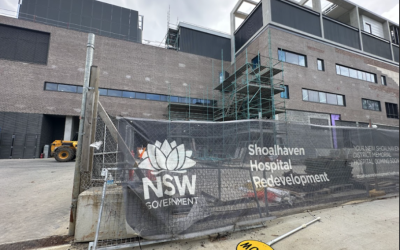
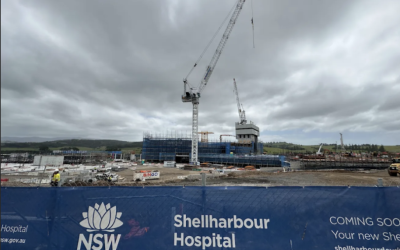
When a market is fuelled by infrastructure, the first thing to look for is the jobs created. This isn’t some short-term event like a music festival or a temporary mining boom. This is essential service infrastructure that is going to be running 24/7 for the next 50 years.

The figures are staggering:

  • Hundreds of jobs are being created right now during the construction phase. These workers need rental accommodation, injecting immediate cash into the local economy.
  • The real prize: an estimated 665 new, permanent, ongoing jobs once the hospital is fully operational.

Think about the quality of those jobs. We are talking about doctors, specialist nurses, technicians, and administrative staff. This reinforces Health Care and Social Assistance as one of the most vital employment sectors in the entire Shoalhaven region. These are high-income, secure, and recession-proof tenants and owner-occupiers.

This is not a theoretical boom. This is a guaranteed injection of high-value human capital into the region. Every single one of those 665 new employees (plus their partners and families) needs a bed, a kitchen, and a roof over their head.

The Housing Demand Pressure Cooker

The core of the issue is simple: demand is about to skyrocket, and supply cannot keep up.

The local government knows this is a problem. They are actively trying to solve it, which itself is a massive signal to investors. You have state-led initiatives like the proposal to deliver up to 380 new homes—including social, affordable, and, crucially, key worker housing—in the nearby Mandalay Precinct.

But let’s be realistic. These housing projects move very slowly (rezoning has to happen first. This usually takes years BEFORE any actual development can occur), and also draw their own demand – meaning they will fill over time with or without the hospital workers as local buyers and new arrivals from Sydney and Canberra come looking for affordable relocation and retirement options. When you add 665 new workers to a region already projected to grow by 16% by 2036, that supply injection acts more like a temporary patch than a permanent fix.  Just announcing a future potential rezone sounds great for the politicians, but does nothing to address the supply demand imbalance that is coming. 

Workers and their families are going to need actual homes in the region, and fast.

This is the psychology of the local growth cycle, but in slow motion.

As the hospital completion nears, you’ll see the arrival of staff who have accepted positions but haven’t secured a rental or a home yet. You might not even see it in the media; but those workers will be a factor in the market, leading to competition, tighter vacancy rates, and upward pressure on prices.

For investors, this means two things are coming:

  1. Robust Capital Growth: Driven by employed singles and couples competing for a limited pool of housing.
  2. Strong Rental Yields: Supported by the volume of new professional workers relocating and needing immediate accommodation.

More Than Just a Hospital: It’s a Regional Health Hub

The benefits of the expansion extend beyond just the immediate employment numbers. This massive investment ensures the hospital becomes the central health hub for the entire region.

It is delivering facilities that radically improve local care:

  • A new Emergency Department (ED) and a larger Intensive Care Unit (ICU).
  • A dedicated cardiology unit and an acute aged care ward.
  • A new mental health ward.

This means the area will attract an ecosystem of related services—private clinics, specialist rooms, and support businesses—meaning an increasing medical precinct in Nowra. This strengthens the economic base and is a stable evergreen industry, much less cyclical than tourism or mining. This is the multiplier effect in action.

Nowra Hospital


Want to benefit: Don’t wait too long.

Every investor wants the “road less travelled,” but most end up following the crowd. The beauty of infrastructure-led property investing is that the road map is laid out by the government in advance—you just have to read the signs.

The $438 million investment is a flashing, neon sign saying: DEMAND IS COMING.

Your job is to now cut through the noise, ignore the day-to-day media hysteria, and focus on the micro-markets in Nowra that will benefit most directly from this influx of key workers.

You need expertise to know:

  • How to avoid the rough areas of public housing or other significant no go zones.
  • Which areas offer the best proximity and transport links for the hospital staff?
  • Which pockets are being overlooked but offer great amenity?
  • Which property type is best positioned for the steepest yield increase?
  • How to negotiate and secure the right property now, before those 665 new workers start their rental/purchase search.
  • How to assess the risks of bushfire, flood and other natural issues. 

Don’t wait until the local news reports start screaming about a rental crisis. Don’t wait until your weekend open homes are shoulder-to-shoulder with incoming hospital staff. If you are considering a purchase in the Nowra area now could be a time to be decisive, choose quality, and get ahead of the herd. 

Resources

Latest Tips & Articles

MARKET UPDATE MID 2025 – THE TIMES THEY ARE CHANGING

MARKET UPDATE MID 2025 – THE TIMES THEY ARE CHANGING

We have now had 3 Rate Cuts this year. The cash rate now sits at 3.6% for the first time since April 2023. Thats around 150per week improvement in cash flow for someone with a $1m mortgage compared to last year. Sydney’s auction clearance rate hit 74% the other day....